 Soufiane Bouchouachi 2026-03-09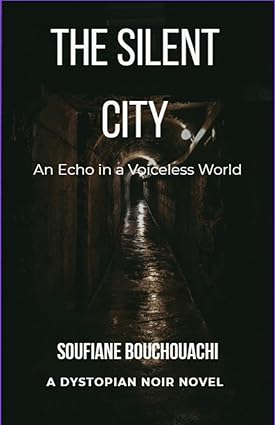
When the heavy cardboard box finally arrived at my door in Łódź, I opened it and held the first paperback copy of my debut novel, The Silent City.
It’s a strange thing to hold five years of your life in your hands. It weighs less than a pound. You can smell the fresh ink, feel the matte texture of the cover, and flip through the 300 pages. But what you can’t see on those printed pages is the invisible ink: the exhaustion, the doubt, the chaos, and the sheer, stubborn refusal to quit.
Since the book was published, whether I am talking to IT colleagues or neighbors, everyone eventually asks me the exact same question:
“You have a demanding full-time IT job, a wife, and young kids. How on earth did you find the time to write a novel?”
My answer is always the same: I didn’t find the time. I stole it.
Here is the true story of how The Silent City was built.
“I didn’t find the time. I stole it.”
The Spark and the Storm
The foundation was laid in the late autumn of 2019. My wife, Volha, and I were talking, and she asked me a profound question: “What do you think will happen in the next decade?”
My mind didn’t go to flying cars or utopian progress. I thought about technology, surveillance, and how easily human connection can be severed. I thought about what it means to be controlled not by violence, but by the theft of our most fundamental human right: our voice.
“Why don’t you write a book about that?” she told me.
So, I started outlining. At the time, our oldest—born in 2014—was five years old. Life was busy with a kindergartener, but it was manageable.
And then, 2020 happened. The pandemic swept across the globe. We went into lockdown. Suddenly, the streets of Poland outside my window were eerily empty and quiet, perfectly mirroring the silent, dystopian metropolis I was trying to build in my head.
But inside my apartment? It was a beautiful, deafening chaos. Remote work, closed schools, and trying to explain the state of the world to a young child.
And the chaos was only just beginning. Right in the middle of drafting this dark, atmospheric thriller, life doubled down. Our family grew. We welcomed a baby in 2021, and then, amidst the sleepless nights and the bottles, we welcomed another baby in 2022.
Think about that timeline for a second. Navigating a senior IT career, surviving a global pandemic, helping a school-aged child, and raising two babies in diapers back-to-back. There was no quiet writer’s retreat for me. There was no cabin in the woods.
“There was no quiet writer’s retreat for me. There was no cabin in the woods. There was only the beautiful, deafening chaos of raising a family.”
The Third Shift
If I was going to finish this book, I realized my day needed a third shift.
• Shift 1: The IT Professional. Building systems, managing catalogues, leading projects.
• Shift 2: The Dad. Playing, teaching, feeding, soothing, and wrestling the kids into bed.
• Shift 3: The Vampire Shift.
Every night, around 10:00 PM, when the house finally exhaled and the baby monitors grew quiet, I made a cup of strong coffee, sat down in the dark, and walked the rainy streets of Vandora with my detective, Alex Hawke.
For five years, those hours between 10 PM and 1 AM were my sanctuary and my battlefield. While the rest of the world was recharging, I fought bone-deep exhaustion to put words on a blank screen. Sometimes I wrote a brilliant chapter; sometimes I stared at a flashing cursor for an hour, my brain fried from a day of corporate logic and crying infants, and went to bed feeling defeated. But the next night, I sat back down.
“For five years, those hours between 10 PM and 1 AM were my sanctuary and my battlefield.”
The Tower of Babel
Writing a novel under those conditions is hard enough. But I decided to make it infinitely harder for myself.
I am originally from Algeria. My literary soul was forged in Arabic, and later shaped by French. When I first sat down to write The Silent City, I naturally wrote the first four chapters in my native Arabic.
As the story expanded and the world-building grew more complex, my thoughts shifted, and I began outlining and drafting in French.
But eventually, I had to face a hard truth: to reach the global audience this dystopian thriller deserved, it needed to be written in the lingua franca of the genre. I made the terrifying decision to restart, push the early drafts aside, and write the entire 300-page novel in English—my third language.
It was the most grueling creative challenge of my life. This was not a translation; it was a total transformation. I had to learn how to make my Arabic and French poetic sensibilities fit into the gritty, hardboiled rhythm of an English noir thriller. I was terrified native speakers would read it and think, This sounds strange.
But then I read about Joseph Conrad. He was a Polish author who became a legendary master of English literature, despite English being his third language. I realized that my linguistic background wasn’t a handicap; it was a style. The prose in The Silent City carries the unique cadence of that journey—authentic, human, and bearing the scars of a writer fighting to find the exact right words in a new tongue.
“It was the most grueling creative challenge of my life. This was not a translation; it was a total transformation.”
A Launch with a Purpose
When the book was finally finished, I realized the core theme of the story—fighting for the right to have a voice—meant something deeply real in our actual world.
In The Silent City, the villain is a corporation that steals sound. In reality, there are children right here in my community who struggle every day just to communicate, to be heard, and to be understood.
That is why I made a vow when the book launched: 100% of my author revenue through the end of 2025 was dedicated to a local organization here in our city that supports children with autism. Charity has always been a deep-rooted tradition in my family. Regardless of sales numbers, my family’s support will always reach them, but I wanted this book to do more than just entertain. I wanted it to help someone else find their voice in the real world.
“In the book, the villain steals sound. In reality, there are children right here in my community who struggle every day just to be heard.”
To the Dreamers
I’m sharing this journey because I know someone reading this right now has an idea stuck in their head. A book, a business, a degree, a passion project. And you are looking at your life, your kids, your job, your exhaustion, and you are telling yourself, “I just don’t have the time right now.”
You are right. You don’t have the time. You will never just “find” the time.
You have to take it. You have to carve it out of the margins of your life. You have to steal it from your sleep. It will be exhausting. You will want to quit a hundred times.
But let me tell you: when that physical proof of your sleepless nights finally arrives, and you hold it in your hands, you will know that every stolen hour was worth it.
The silence is finally broken. Now, if you’ll excuse me, the kids are asleep. It’s time to start writing the sequel.
“The perfect time does not exist. You have to carve it out of the margins of your life. You have to steal it from your sleep.”
The Silent City is available now worldwide on Amazon, and on Empik in Poland. Thank you to Volha, my amazing kids, and to everyone who has supported this journey so far.
Amazon
Empik